Welcome to the world of Church Acoustics

Teaching the highest quality in Church Sound excellence

  • Supported by

    Contact:
    Ph # 519-582-4443
    email: jdb@jdbsound.com

    The Bible is the de facto standard for all church worship needs including sound and acoustics.

    2 Timothy 2:15

  • Archives

  • For additional contact information scan the QR code below

    link to jdbsound.com

Posts Tagged ‘Solomon’s Temple’

Effective Church Acoustic Solutions for Better Worship Experience

Posted by jdbsound on February 27, 2026


Large-room acoustics, especially in churches, is rather straightforward.  However, the solutions are often inconvenient and often mean a change in the room’s aesthetics.  The thing is, the aesthetic issues come up when an acoustic fix doesn’t work, and the church has to look at it for the next 30 years before it can afford to attempt another fix.

Acoustic problems always come in layers.  They can be fixed one layer at a time, or all of them can be fixed in one step. 

There are two main approaches to acoustic solutions.  Biblical or Secular.  The first is the point-and-shoot secular method.

In the point-and-shoot method, a person with some acoustic knowledge and training in secular acoustics makes noise, claps their hands, and takes measurements.  They find an offensive surface, and they apply an acoustic fix that can be absorptive,  diffusive or a combination product.  The acoustic fix works.  However, shortly after the acoustic fix is applied, another acoustic problem arises, and it is annoying enough to also need to be fixed.  Either the same consultant or another consultant makes noises, claps their hands, and takes measurements.  They discover another offending surface and recommend another acoustical fix. 

Shortly after the second acoustic fix is applied, another problem shows up.  What!  Why didn’t the acoustical consultant or expert anticipate the problem?  Simple.  The secular method addresses one layer at a time.  Most acoustical experts don’t have the training or experience to drill down deep to provide a complete acoustical solutions.  Over the years, some consultants have said, this is how to get repeat customers.  Fix the room just enough to prove you are the expert, to come back when new problems show up.  The truth is, their training was reactive, not preventative.  There is no training program that shows how to anticipate acoustical problems and how to prevent them from becoming an issue. 

It is similar to how some Medical Doctors know how to maintain a person on a drug dependency system and never heal the person of their illness.  The first drug makes the current problem manageable, but there is another drug needed to manage the side effects. Months later, as a new side effect shows up, the Doctor prescribes another pill to treat the second side effect.  Patients are treated as ATM machines for the drug companies.  This cycle never ends, and the person never gets better or healed.  Likewise, acoustical experts are good at providing enough of an acoustic fix that allows the audio people to be more inventive and dependent on technology to limp along. The audio community then acts as if the laws of physics don’t apply to them, and they launch into endless research to find an audio device that circumvents the “laws of physics”, or makes the physics bend to their wishes.  After spending thousands of dollars on the latest and greatest technology, the problems persist.

The point-and-shoot method of acoustic fixes rarely ends with a happy client or church congregation.  This approach is more like trying to win the lottery rather than creating a permanent solution.  The point-and-shoot method is costly.  From surveys done in the 1990’s, the sound and acoustic quality in a church can affect church attendance up to 15%.  Not only does quality sound affect those with hearing problems, which can be up to 10% of church members and adherents, but a growing number of people, between 4 to 18%, would rather watch a worship service at home, where the sound quality is better, rather than attend the service in person in a poorly sounding room. When people are not attending, they are not giving, which is an added cost to putting up with poor acoustics and sound.  For some churches, a loss of 10% in attendance can translate to an annual 5% loss of income for every year the church puts up with the acoustical problem.  For a 600-seat church, that can be a loss of over $310,000 in 10 years.  That is about the cost of replacing a church roof.  The point-and-shoot method of acoustical management never stops costing a church until it is properly fixed.

The second method of managing large room acoustics is to see the solutions as a complete system where every possible problem is prevented before it can happen.  Added to that, for a church, the room also has to be interactive to support congregational singing, the second most important activity for worship, with hearing the sermon (speech) the most important activity.  

The steps in church sound and large room sound are as follows.

  1. Creation of the sound.  Singing or spoken word or the playing of a musical instrument.
  2. Recording of the sound.  If there is a need to amplify the sound, you need to have microphones to record those sounds. 
  3. Next is an amplifying system that records the sounds, mixes them, and then broadcasts the sound to the rest of the room.  Here is where things get crazy.

In a good room, the speakers for the sound system are laid out to meet the needs of the listeners in the seats. The acoustics don’t get in the way of the performance of the microphones, the floor monitors or the instruments on stage.  Good acoustics will support congregational singing.  Good acoustics don’t interfere with a properly designed sound system.

People are designed to look at what they hear, and a properly designed system will support that in a good room.  In such cases, the sound system is just a tool, and it is barely noticed during worship.  No feedback, no dead spots, no interruptions.  A church with good acoustics often has extra funds for higher-quality equipment that never gets in the way of worship.

In a poor room, a room treated by secular methods, sound engineers jump through hoops with speaker layouts that create an unnatural-sounding solution.  They get creative in finding ways to attempt to circumvent physics in the hope of manufacturing a compromised solution that falls short in meeting the needs of the listeners.  There is little success and a high level of acceptance of compromise on a weekly basis.  Such sound systems cost thousands of dollars more, with each upgrade providing only incremental fixes rather than meaningful solutions and often the congregational singing gets worse.

Did you know that drum booths and in-ear monitors(I.E.M.) are acoustic-driven?  In a good room, the drummer can hear the stage full of musicians and play more quietly.  The drummer doesn’t have to compete with others when they can hear themselves and all the other performers.  Likewise, in a good room, floor monitors work just fine, where the musicians can hear the audience and the floor monitors without any effort.

In a good room, there is no time when the floor monitor needs to be louder than the front of house speakers.  Yet in a bad room, the floor monitors need to turn up so loud and the drummer can’t hear themselves that it drives people to IEM’s and drum booths.  When a church gets its acoustics fixed, the drum booth and IEM disappear.  Did you know that for many churches, the drum booth and IEM system cost more than fixing the acoustics?

Which takes us back to the real issue, aesthetics.  Whether your church does point-and-shoot acoustical fixes or a complete acoustical fix, it will change the appearance of the space.  In the end, whose church is it?

Have you ever wondered what the purpose of the palm tree carvings in the holiest temple on the planet was?  It says in 1st King, 6:29 that on all the walls were carvings of Cherubs, Open Flowers and Palm Trees.  The carvings of flowers and cherubs are easy to explain and are supported spiritually.  What is spiritual about palm trees?  The carvings of palm trees were to solve an acoustic problem along with the veil.  Put the carvings and veil together, and you have a recipe for a universal acoustical fix that works in all existing churches.  Can it be that simple?  Afterall, isn’t this a house of God, or a place for God’s people to worship in?  If this acoustical treatment was used in God’s house, it should be good enough for your church. 

Currently, over 400 churches worldwide have applied this acoustic fix, and the results have been successful every time.  Does it change the aesthetics?  Yes, it does.  Do people complain about it?  Always until they hear it.  Once people experience it, especially the congregational singing, they say it adds character to the room.  This has led people to find creative ways to blend the aesthetics. If palm tree shapes were good enough for God’s house that Jesus designed, then how much more can your church benefit from a complete acoustical fix rather than a point-and-shoot approach?

Another way of saying it, following the scriptures provides a simple, straightforward and affordable solution to church sound issues that meets everyone’s needs in one step.  All other sound and acoustic fixes are secular, and the secular methods are complex, confusing, hyped, and always very expensive, rarely meeting the needs of performers and listeners at the same time.  The secular method to church sound is a money pit that has marginal returns on investment, whereas the Biblical method heals the room, which, in turn, this high-quality sound pays for itself every 18 to 24 months.  That is stewardship. 
Posted in Church Acoustics, Church Sound Systems | Tagged: , , , , , , , , , , | Leave a Comment »

Is Dynamite is an option for Church Acoustics?

Posted by jdbsound on September 17, 2024


True or False

In a manual for a Real-Time Analyzer, did the author suggest that blowing up a room with Dynamite is the best cure for bad acoustics?

It is Ture

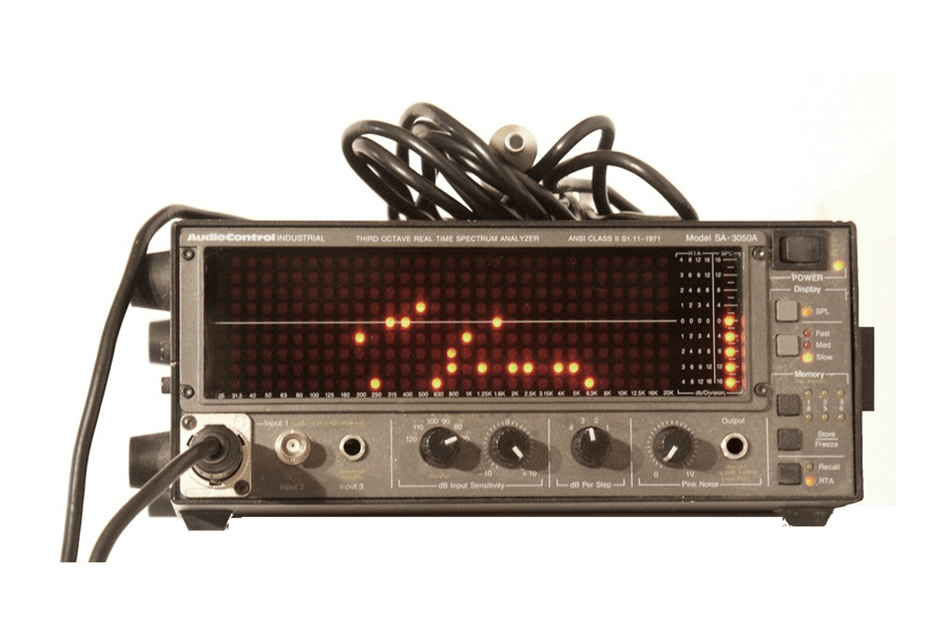
Image from TC Fulong Inc. Chicago

1990 – SA-3050A SPECTRUM ANALYZER Real Time, Third-octave Analyzer

Page 5-1

5. SA-3050A Applications
The SA-3050A has many applications. Some of these include:
• Sound System Equalization
• Monitor System Feedback Control
• Home Stereo Equalization and Setup
• Tape Machine Alignment.
• Sound and Music Monitoring
• Crossover Testing
5.1 Sound System Equalization
Sound reinforcement systems, large or small, benefit even more from carefully applied equalization. While only dynamite can really cure a really bad case of poor acoustics, equalization comes right after loudspeaker array design when it comes to getting the most out of any speaker system in any room.

We would never make such a suggestion.

The good news is that the Bible’s method of managing church acoustics always works—no exception. (We have studied and tested it in at least 1400+ churches.)

Posted in Church Acoustics, Church Sound Systems | Tagged: , , , , , | Comments Off on Is Dynamite is an option for Church Acoustics?

Churches are not concert halls.

Posted by jdbsound on October 23, 2022


They are Supposed to be better!

What! Are Churches supposed to be better than concert halls?
That’s a joke, isn’t it? No, this is not a joke.

The world is at war with the church and followers of Christ. Like the story of the Tower of Babel in Genesis 11:1-9, where the people scattered when they were given different languages, the same thing happens when attending a church where the acoustics and sound get in the way of hearing clear and unaltered speech and music. In studying an abundance of existing churches, it becomes clear that there is a direct correlation between acoustics, sound quality, congregational health, and attendance. It would be fair to say that this correlation is throughout church history.

Just as the serpent deceived Eve, the serpent has been using houses of worship as a battlefield in waging that war ever since. Throughout the Bible, there are hundreds of warnings of deception, liars, false teachers, gods, Baal, and other worship idols. Satan, the great deceiver, will do anything to keep people out of heaven and build up his own kingdom. Any person tricked or deceived out of choosing Jesus and the salvation message is being added to Satan’s domain. With Satan and all his forces against us, we need every tool possible to properly preach the full Gospel message.

Throughout the New Testament, there are many warnings and declarations of the importance of everyone understanding the full Gospel message. Here are some examples.
1 Corinthians 1:10-11, Now I urge you, brothers and sisters, by the name of our Lord Jesus Christ, that you all agree and that there be no divisions among you, but that you be made complete in the same mind and in the same judgment. For I have been informed concerning you, my brothers and sisters, by Chloe’s people, that there are quarrels among you.
1 Corinthians 11:17-19, Now in giving this next instruction I do not praise you, because you come together not for the better, but for the worse. For, in the first place, when you come together as a church, I hear that divisions exist among you; and in part I believe it. For there also have to be factions among you, so that those who are approved may become evident among you.
2 Peter 2:1-2, But false prophets also appeared among the people, just as there will also be false teachers among you, who will secretly introduce destructive heresies, even denying the Master who bought them, bringing swift destruction upon themselves. Many will follow their indecent behavior, and because of them the way of the truth will be maligned;

In the past, churches have split because of issues such as the color of the pew Bibles, Hymnals, and whether to have wine or grape juice for communion. Likewise, a misunderstood word or phrase caused by sub-quality sound, regardless of being acoustical or amplified, can set people off as well, which has led to church splits. Just as words can bring people together, they can also set people against each other.

To that end, a church building is supposed to be a tool that doesn’t get in the way of hearing clear and unaltered speech. It is meant to be a safe place for the followers of Christ. It must have the right characteristics for the engagement of His people, to be participants in the whole worship, and for the preaching of the Gospel. For this reason, a church must outperform any secular concert and recital hall and all entertainment facilities at every level, period. However, it is not in the way most church people think.

The following is a walk-through explaining the differences between concert halls and entertainment facilities and how worship spaces are supposed to be unique in how they are to perform. It also includes a church sound standard lifted directly from the Bible. A standard about church acoustics, building design, and function, with a splash of the science that supports the scriptures. In studying and working with hundreds of churches over the last 40 years, the impact of upgrading a church Biblically has been a consistent result of increasing church attendance. These attendance increases have been consistent at every upgraded church from 5 to 25%, years later. Who knew that the Bible has so much to say about science, acoustics, human anatomy, and how it all works together.

Link to Full PDF Article https://www.jdbsound.com/art/churches%20are%20not%20concert%20halls%20final.pdf

Posted in Church Acoustics | Tagged: , , , , , , , , , , , | Comments Off on Churches are not concert halls.

Generation of liers

Posted by jdbsound on May 16, 2022


Posted in Rants | Tagged: , , , , , , , | Comments Off on Generation of liers

Another Successful Project following the Bible’s Method of managing Sound.

Posted by jdbsound on May 2, 2022


Excellent Acoustics on the first day of worship and every day after that!

This is what a Phase Coherent Sound Diffuser System looks like. There is no other acoustical system that can perform as well as this. This is a system. Not a point-and-shoot system as how all other acoustic products are applied.

Most acoustics treatments applied to churches fail to improve congregational singing.  Yes, adding enough of any acoustical product to a worship space will change how the room sounds, but in most cases, the change is exchanging one set of acoustics problems for another set of problems.  As a result, there is no real improvement in the overall quality of worship. 

When using the Biblical method of treating the acoustics of a worship space, not only is there an improvement, congregational singing is significantly enhanced.  In most churches that upgraded their sound the Biblical way, the audience participation often goes from less than 30% of the congregation signing to over 70% of the congregation singing within a few weeks after the worship space is upgraded.  This realizes a church attendance from 5 to 25% within the first year and higher attendance for years to come.  This improvement in attendance comes from making the room friendlier to anyone with hearing issues, which affects 8 to 25% of any population group.

Shantz Mennonite Church

Having any worship space enhanced with Biblical acoustics makes the room more accessible for everyone rather than just for younger people.  Here is an example of a brand new church where the song leader asked everyone to sing acapella during their first worship service.  Few churches begin with good sound on the first day and every following worship service.  Whether a new or existing church, bringing the sound performance level up to Biblical standards makes the performance of the worship space a room where people will want to worship in, rather than a place where people wonder if they can understand the whole message without playing it back later electronically. 

If you want to experience a great-sounding worship space, visit Shantz Mennonite Church in Baden, Ontario, Canada.  This is just the latest of the hundreds of churches that have managed their sound according to what the Bible teaches.  Sound in a worship space managed any other way comes up short of meeting the needs of any congregation. 

Here are more images of the church.

shantz mennonite church baden 1a copy

Posted in Church Acoustics, Church Sound Systems | Tagged: , , , , , , , , , , , , , , , , , , , , , | Comments Off on Another Successful Project following the Bible’s Method of managing Sound.

Can Science Explain Everything?

Posted by jdbsound on April 28, 2022


Posted in Church Acoustics, Church Sound Systems | Tagged: , , , , , , , , , , | Comments Off on Can Science Explain Everything?

A Bible Story Parody

Posted by jdbsound on January 24, 2022


This is an updated version of this parody story originally published in 1990.

Enjoy.

A Bible Story Parody

Posted in Church Acoustics, Church Sound Systems | Tagged: , , , , , , , | 1 Comment »

Flow Chart of the House of Worship God Designed for the best Sound and Acoustics

Posted by jdbsound on November 4, 2021


The path to the best sound and acoustics for a church can be found in the Bible. Who knew! Here is a printable version of the House of Worship flowchart. There are a number of updates, improvements, and, a bonus, the secret sauce recipe for church acoustics. All of it is based on the scriptures.

The flow chart is in two parts. The first part details the temple in terms of how every part of the building points to Jesus and Christians and how the Holy Place was a template for the modern church. This section can also be used as a Bible study or study guide for anyone interested in Solomon’s Temple.

The second part does a deep dive into the sound and acoustics side of the temple and how that translates into meeting the needs of modern churches.

The house of Worship that God designed solves the one problem most churches have – poor congregational singing. Studying this method of sound management for churches solves the congregational singing issue, and it removes most of the limiting factors that affect all sound systems. It seems that there is a symbiotic relationship between good congregational singing and amplified sound that was unknown until a Biblical solution to church sound management was applied.

There are many churches that have very high quality, and expensive sound systems that are performing well below their full potential, and most church owners don’t have a clue of either how much better their sound system should be performing or are unaware of how much unmanaged acoustic or the wrong kind of acoustical treatment is limiting what their sound systems could really do.

The other thing that must be made clear, no sound system or electronic technology can affect congregational singing. The only effective method of bringing good congregational signing into existing churches is by using the method found in the Bible. This method of managing church sound can be universally applied to all existing building shapes and designs, denominations, and all worship styles. Many pastors and church apologists often say that the scripture is sufficient in all things. Applying the Bible’s method to managing the acoustic of a church once again proves that such thinking is also applicable to the modern churches Christians around the worship own and use to worship God.

The file is large and can be printed into a 23-page document to be shared with others.

Flow Chart of Solomon’s Temple

Posted in Church Acoustics, Educational Must Read Articles | Tagged: , , , , , , , , , , , , , , , , | Comments Off on Flow Chart of the House of Worship God Designed for the best Sound and Acoustics

Passive verses Active Worship. Is there a difference?

Posted by jdbsound on October 8, 2021


Many people ask how the panels will look before hearing how they perform when it comes to managing the acoustic of a sanctuary for worship. Here is a short video comparing two acoustic treatments. One system comes from a non-Biblical solution that partially works and is very expensive. The other system comes from the Bible. It provides the proper acoustical conditions for worship every time and at a fraction of the cost. Our experience shows that most church members change their opinions on aesthetics when the acoustical fix does a great job of fixing the room.

Congregation members of most churches do agree with one idea. It seems that if the acoustic system fails at improving congregational singing, the panels on the wall have to look good as wall furniture. If the acoustic treatment improves all parts of worship, especially congregational singing, concerns about how the panels look melt away. The aesthetic issues disappear.

The half-round diffuser systems are also passive noise cancellers. If you have a noisy HVAC system, they can reduce noise up to 20dB at no extra cost without over-dampening or compromising the worship space acoustics.

If you have any questions or comments or want other subjects discussed, please post them below.

Phase Gradient Diffusers vs. Tube Radiators. Which gets better results. Church Acoustics

Passive worship is when people feel alone during congregational singing. Feeling alone prepares people for hearing a feel-good message, whether it is prosperity or a self-help gospel.

Active worship is when more than 60% of the congregation is actively singing all the time, and for some, sing the harmonies in the hymns. When there is active singing, it helps to unite people to hear the full Gospel message regardless of how strong that message is preached. Active worship often leads to a stronger church and people making long-term relationships.

The acoustical condition of a worship space is a very accurate measuring tool to determine the type of worship any church practices. A good-sounding worship space supports congregational singing and does a better job at supporting amplified speech with less sound equipment.

An under-performing worship space not only makes a room full of people feel like they are all alone, but it takes 3 to 4 times the audio equipment to get decent speech quality, and since less than 60 to 75% of the congregation is not singing, the excessive sound system is also used to entertain the congregation with worship teams and performance singers. What better way to end a long session of feel-good music to cap it off with a feel-good message. Here is an article that explains this more.

By Joseph De Buglio

Posted in Church Acoustics, Educational Must Read Articles | Tagged: , , , , , , , , | Comments Off on Passive verses Active Worship. Is there a difference?