Welcome to the world of Church Acoustics

Teaching the highest quality in Church Sound excellence

  • Supported by

    Contact:
    Ph # 519-582-4443
    email: jdb@jdbsound.com

    The Bible is the de facto standard for all church worship needs including sound and acoustics.

    2 Timothy 2:15

  • Archives

  • For additional contact information scan the QR code below

    link to jdbsound.com

Posts Tagged ‘JdB Sound Acoustics’

Effective Church Acoustic Solutions for Better Worship Experience

Posted by jdbsound on February 27, 2026


Large-room acoustics, especially in churches, is rather straightforward.  However, the solutions are often inconvenient and often mean a change in the room’s aesthetics.  The thing is, the aesthetic issues come up when an acoustic fix doesn’t work, and the church has to look at it for the next 30 years before it can afford to attempt another fix.

Acoustic problems always come in layers.  They can be fixed one layer at a time, or all of them can be fixed in one step. 

There are two main approaches to acoustic solutions.  Biblical or Secular.  The first is the point-and-shoot secular method.

In the point-and-shoot method, a person with some acoustic knowledge and training in secular acoustics makes noise, claps their hands, and takes measurements.  They find an offensive surface, and they apply an acoustic fix that can be absorptive,  diffusive or a combination product.  The acoustic fix works.  However, shortly after the acoustic fix is applied, another acoustic problem arises, and it is annoying enough to also need to be fixed.  Either the same consultant or another consultant makes noises, claps their hands, and takes measurements.  They discover another offending surface and recommend another acoustical fix. 

Shortly after the second acoustic fix is applied, another problem shows up.  What!  Why didn’t the acoustical consultant or expert anticipate the problem?  Simple.  The secular method addresses one layer at a time.  Most acoustical experts don’t have the training or experience to drill down deep to provide a complete acoustical solutions.  Over the years, some consultants have said, this is how to get repeat customers.  Fix the room just enough to prove you are the expert, to come back when new problems show up.  The truth is, their training was reactive, not preventative.  There is no training program that shows how to anticipate acoustical problems and how to prevent them from becoming an issue. 

It is similar to how some Medical Doctors know how to maintain a person on a drug dependency system and never heal the person of their illness.  The first drug makes the current problem manageable, but there is another drug needed to manage the side effects. Months later, as a new side effect shows up, the Doctor prescribes another pill to treat the second side effect.  Patients are treated as ATM machines for the drug companies.  This cycle never ends, and the person never gets better or healed.  Likewise, acoustical experts are good at providing enough of an acoustic fix that allows the audio people to be more inventive and dependent on technology to limp along. The audio community then acts as if the laws of physics don’t apply to them, and they launch into endless research to find an audio device that circumvents the “laws of physics”, or makes the physics bend to their wishes.  After spending thousands of dollars on the latest and greatest technology, the problems persist.

The point-and-shoot method of acoustic fixes rarely ends with a happy client or church congregation.  This approach is more like trying to win the lottery rather than creating a permanent solution.  The point-and-shoot method is costly.  From surveys done in the 1990’s, the sound and acoustic quality in a church can affect church attendance up to 15%.  Not only does quality sound affect those with hearing problems, which can be up to 10% of church members and adherents, but a growing number of people, between 4 to 18%, would rather watch a worship service at home, where the sound quality is better, rather than attend the service in person in a poorly sounding room. When people are not attending, they are not giving, which is an added cost to putting up with poor acoustics and sound.  For some churches, a loss of 10% in attendance can translate to an annual 5% loss of income for every year the church puts up with the acoustical problem.  For a 600-seat church, that can be a loss of over $310,000 in 10 years.  That is about the cost of replacing a church roof.  The point-and-shoot method of acoustical management never stops costing a church until it is properly fixed.

The second method of managing large room acoustics is to see the solutions as a complete system where every possible problem is prevented before it can happen.  Added to that, for a church, the room also has to be interactive to support congregational singing, the second most important activity for worship, with hearing the sermon (speech) the most important activity.  

The steps in church sound and large room sound are as follows.

  1. Creation of the sound.  Singing or spoken word or the playing of a musical instrument.
  2. Recording of the sound.  If there is a need to amplify the sound, you need to have microphones to record those sounds. 
  3. Next is an amplifying system that records the sounds, mixes them, and then broadcasts the sound to the rest of the room.  Here is where things get crazy.

In a good room, the speakers for the sound system are laid out to meet the needs of the listeners in the seats. The acoustics don’t get in the way of the performance of the microphones, the floor monitors or the instruments on stage.  Good acoustics will support congregational singing.  Good acoustics don’t interfere with a properly designed sound system.

People are designed to look at what they hear, and a properly designed system will support that in a good room.  In such cases, the sound system is just a tool, and it is barely noticed during worship.  No feedback, no dead spots, no interruptions.  A church with good acoustics often has extra funds for higher-quality equipment that never gets in the way of worship.

In a poor room, a room treated by secular methods, sound engineers jump through hoops with speaker layouts that create an unnatural-sounding solution.  They get creative in finding ways to attempt to circumvent physics in the hope of manufacturing a compromised solution that falls short in meeting the needs of the listeners.  There is little success and a high level of acceptance of compromise on a weekly basis.  Such sound systems cost thousands of dollars more, with each upgrade providing only incremental fixes rather than meaningful solutions and often the congregational singing gets worse.

Did you know that drum booths and in-ear monitors(I.E.M.) are acoustic-driven?  In a good room, the drummer can hear the stage full of musicians and play more quietly.  The drummer doesn’t have to compete with others when they can hear themselves and all the other performers.  Likewise, in a good room, floor monitors work just fine, where the musicians can hear the audience and the floor monitors without any effort.

In a good room, there is no time when the floor monitor needs to be louder than the front of house speakers.  Yet in a bad room, the floor monitors need to turn up so loud and the drummer can’t hear themselves that it drives people to IEM’s and drum booths.  When a church gets its acoustics fixed, the drum booth and IEM disappear.  Did you know that for many churches, the drum booth and IEM system cost more than fixing the acoustics?

Which takes us back to the real issue, aesthetics.  Whether your church does point-and-shoot acoustical fixes or a complete acoustical fix, it will change the appearance of the space.  In the end, whose church is it?

Have you ever wondered what the purpose of the palm tree carvings in the holiest temple on the planet was?  It says in 1st King, 6:29 that on all the walls were carvings of Cherubs, Open Flowers and Palm Trees.  The carvings of flowers and cherubs are easy to explain and are supported spiritually.  What is spiritual about palm trees?  The carvings of palm trees were to solve an acoustic problem along with the veil.  Put the carvings and veil together, and you have a recipe for a universal acoustical fix that works in all existing churches.  Can it be that simple?  Afterall, isn’t this a house of God, or a place for God’s people to worship in?  If this acoustical treatment was used in God’s house, it should be good enough for your church. 

Currently, over 400 churches worldwide have applied this acoustic fix, and the results have been successful every time.  Does it change the aesthetics?  Yes, it does.  Do people complain about it?  Always until they hear it.  Once people experience it, especially the congregational singing, they say it adds character to the room.  This has led people to find creative ways to blend the aesthetics. If palm tree shapes were good enough for God’s house that Jesus designed, then how much more can your church benefit from a complete acoustical fix rather than a point-and-shoot approach?

Another way of saying it, following the scriptures provides a simple, straightforward and affordable solution to church sound issues that meets everyone’s needs in one step.  All other sound and acoustic fixes are secular, and the secular methods are complex, confusing, hyped, and always very expensive, rarely meeting the needs of performers and listeners at the same time.  The secular method to church sound is a money pit that has marginal returns on investment, whereas the Biblical method heals the room, which, in turn, this high-quality sound pays for itself every 18 to 24 months.  That is stewardship. 
Posted in Church Acoustics, Church Sound Systems | Tagged: , , , , , , , , , , | Leave a Comment »

Is Dynamite is an option for Church Acoustics?

Posted by jdbsound on September 17, 2024


True or False

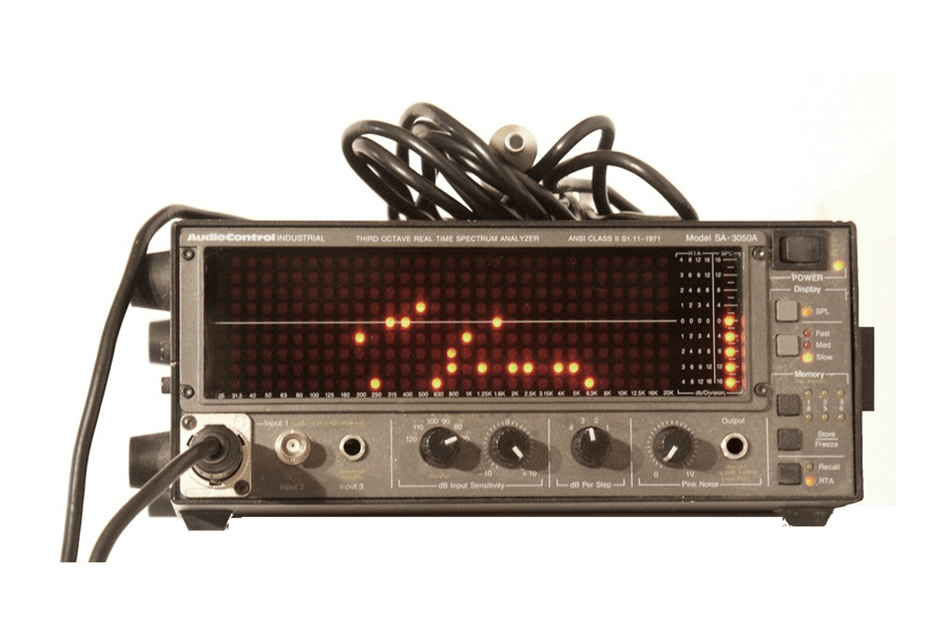
In a manual for a Real-Time Analyzer, did the author suggest that blowing up a room with Dynamite is the best cure for bad acoustics?

It is Ture

Image from TC Fulong Inc. Chicago

1990 – SA-3050A SPECTRUM ANALYZER Real Time, Third-octave Analyzer

Page 5-1

5. SA-3050A Applications
The SA-3050A has many applications. Some of these include:
• Sound System Equalization
• Monitor System Feedback Control
• Home Stereo Equalization and Setup
• Tape Machine Alignment.
• Sound and Music Monitoring
• Crossover Testing
5.1 Sound System Equalization
Sound reinforcement systems, large or small, benefit even more from carefully applied equalization. While only dynamite can really cure a really bad case of poor acoustics, equalization comes right after loudspeaker array design when it comes to getting the most out of any speaker system in any room.

We would never make such a suggestion.

The good news is that the Bible’s method of managing church acoustics always works—no exception. (We have studied and tested it in at least 1400+ churches.)

Posted in Church Acoustics, Church Sound Systems | Tagged: , , , , , | Comments Off on Is Dynamite is an option for Church Acoustics?

A New Acoustical Tool for the Acoustic ToolBox.

Posted by jdbsound on October 3, 2023


Performance Space Acoustics is fraught with many myths, misinformation, and limitations.  It is pure science, but its complexity makes it appear part of the mystical arts, brainwashing most into believing good acoustics is not possible or repeatable.  What could be further from the truth?  There are rules for acoustics.  Follow them, and success is assured every time.  Break any rule, and the results create an endless and costly cycle of experiments to correct the error.  It doesn’t have to be that way, but it is human nature for people to believe that the rules don’t apply to them.  The burning question is, which is greater, the laws of physics or human nature?  The answer is simple.  The laws of nature cannot be broken, and no amount of human cleverness can change that. 

It has often been said and proven that acoustical problems come in layers.  The most common and misunderstood layer has to do with excess bass.  This layer is often misunderstood in acoustical measurements due to the sound-masking effects of bass energy.  Most experts are not trained…

Download the rest of the document here. The New Acoustical Toolbox.

Posted in Church Acoustics | Tagged: , , , , , , , , , , , , | Comments Off on A New Acoustical Tool for the Acoustic ToolBox.

Churches are not concert halls.

Posted by jdbsound on October 23, 2022


They are Supposed to be better!

What! Are Churches supposed to be better than concert halls?
That’s a joke, isn’t it? No, this is not a joke.

The world is at war with the church and followers of Christ. Like the story of the Tower of Babel in Genesis 11:1-9, where the people scattered when they were given different languages, the same thing happens when attending a church where the acoustics and sound get in the way of hearing clear and unaltered speech and music. In studying an abundance of existing churches, it becomes clear that there is a direct correlation between acoustics, sound quality, congregational health, and attendance. It would be fair to say that this correlation is throughout church history.

Just as the serpent deceived Eve, the serpent has been using houses of worship as a battlefield in waging that war ever since. Throughout the Bible, there are hundreds of warnings of deception, liars, false teachers, gods, Baal, and other worship idols. Satan, the great deceiver, will do anything to keep people out of heaven and build up his own kingdom. Any person tricked or deceived out of choosing Jesus and the salvation message is being added to Satan’s domain. With Satan and all his forces against us, we need every tool possible to properly preach the full Gospel message.

Throughout the New Testament, there are many warnings and declarations of the importance of everyone understanding the full Gospel message. Here are some examples.
1 Corinthians 1:10-11, Now I urge you, brothers and sisters, by the name of our Lord Jesus Christ, that you all agree and that there be no divisions among you, but that you be made complete in the same mind and in the same judgment. For I have been informed concerning you, my brothers and sisters, by Chloe’s people, that there are quarrels among you.
1 Corinthians 11:17-19, Now in giving this next instruction I do not praise you, because you come together not for the better, but for the worse. For, in the first place, when you come together as a church, I hear that divisions exist among you; and in part I believe it. For there also have to be factions among you, so that those who are approved may become evident among you.
2 Peter 2:1-2, But false prophets also appeared among the people, just as there will also be false teachers among you, who will secretly introduce destructive heresies, even denying the Master who bought them, bringing swift destruction upon themselves. Many will follow their indecent behavior, and because of them the way of the truth will be maligned;

In the past, churches have split because of issues such as the color of the pew Bibles, Hymnals, and whether to have wine or grape juice for communion. Likewise, a misunderstood word or phrase caused by sub-quality sound, regardless of being acoustical or amplified, can set people off as well, which has led to church splits. Just as words can bring people together, they can also set people against each other.

To that end, a church building is supposed to be a tool that doesn’t get in the way of hearing clear and unaltered speech. It is meant to be a safe place for the followers of Christ. It must have the right characteristics for the engagement of His people, to be participants in the whole worship, and for the preaching of the Gospel. For this reason, a church must outperform any secular concert and recital hall and all entertainment facilities at every level, period. However, it is not in the way most church people think.

The following is a walk-through explaining the differences between concert halls and entertainment facilities and how worship spaces are supposed to be unique in how they are to perform. It also includes a church sound standard lifted directly from the Bible. A standard about church acoustics, building design, and function, with a splash of the science that supports the scriptures. In studying and working with hundreds of churches over the last 40 years, the impact of upgrading a church Biblically has been a consistent result of increasing church attendance. These attendance increases have been consistent at every upgraded church from 5 to 25%, years later. Who knew that the Bible has so much to say about science, acoustics, human anatomy, and how it all works together.

Link to Full PDF Article https://www.jdbsound.com/art/churches%20are%20not%20concert%20halls%20final.pdf

Posted in Church Acoustics | Tagged: , , , , , , , , , , , | Comments Off on Churches are not concert halls.

Generation of liers

Posted by jdbsound on May 16, 2022


Posted in Rants | Tagged: , , , , , , , | Comments Off on Generation of liers

Another Successful Project following the Bible’s Method of managing Sound.

Posted by jdbsound on May 2, 2022


Excellent Acoustics on the first day of worship and every day after that!

This is what a Phase Coherent Sound Diffuser System looks like. There is no other acoustical system that can perform as well as this. This is a system. Not a point-and-shoot system as how all other acoustic products are applied.

Most acoustics treatments applied to churches fail to improve congregational singing.  Yes, adding enough of any acoustical product to a worship space will change how the room sounds, but in most cases, the change is exchanging one set of acoustics problems for another set of problems.  As a result, there is no real improvement in the overall quality of worship. 

When using the Biblical method of treating the acoustics of a worship space, not only is there an improvement, congregational singing is significantly enhanced.  In most churches that upgraded their sound the Biblical way, the audience participation often goes from less than 30% of the congregation signing to over 70% of the congregation singing within a few weeks after the worship space is upgraded.  This realizes a church attendance from 5 to 25% within the first year and higher attendance for years to come.  This improvement in attendance comes from making the room friendlier to anyone with hearing issues, which affects 8 to 25% of any population group.

Shantz Mennonite Church

Having any worship space enhanced with Biblical acoustics makes the room more accessible for everyone rather than just for younger people.  Here is an example of a brand new church where the song leader asked everyone to sing acapella during their first worship service.  Few churches begin with good sound on the first day and every following worship service.  Whether a new or existing church, bringing the sound performance level up to Biblical standards makes the performance of the worship space a room where people will want to worship in, rather than a place where people wonder if they can understand the whole message without playing it back later electronically. 

If you want to experience a great-sounding worship space, visit Shantz Mennonite Church in Baden, Ontario, Canada.  This is just the latest of the hundreds of churches that have managed their sound according to what the Bible teaches.  Sound in a worship space managed any other way comes up short of meeting the needs of any congregation. 

Here are more images of the church.

shantz mennonite church baden 1a copy

Posted in Church Acoustics, Church Sound Systems | Tagged: , , , , , , , , , , , , , , , , , , , , , | Comments Off on Another Successful Project following the Bible’s Method of managing Sound.

Can Science Explain Everything?

Posted by jdbsound on April 28, 2022


Posted in Church Acoustics, Church Sound Systems | Tagged: , , , , , , , , , , | Comments Off on Can Science Explain Everything?

A Bible Story Parody

Posted by jdbsound on January 24, 2022


This is an updated version of this parody story originally published in 1990.

Enjoy.

A Bible Story Parody

Posted in Church Acoustics, Church Sound Systems | Tagged: , , , , , , , | 1 Comment »

Does sound quality in a Worship Space –

Posted by jdbsound on June 22, 2021


  • Affect church attendance?
  • Affects church finances?
  • Affects church health?
  • Affects a church’s reputation within a local community?
  • Affects how people respond to the Gospel message?
  • Affects what a minister preaches the Gospel?
  • Affects how a minister preaches?
  • Affects people emotionally?

Myths vs Facts: 

According to various hearing organizations such as the American or Canadian Hearing Societies and other health organizations, 8 to 25% of people will have hearing loss or impairment within any community. For some people, the hearing loss is in one ear or both ears. For other people, using a hearing aid does make up the difference so those people can interact socially with others without needing to use sign language. The bottom line is, if a person can have a normal conversation in a living room but has trouble hearing and being engaged in conversations in larger rooms, these people are less likely to attend a church with less-than-ideal acoustics and amplified sound. Hearing loss, the invisible disability, does make social gatherings awkward for many. Numerous people with hearing loss resort to the practice of self-isolation from social events, including weekly worship services. Sound does have an impact on church attendance for those who have any kind of loss or impairment.

Good acoustics and sound system design in a church make the worship space much more accessible and appealing for those with hearing loss within any community. That is why churches that follow the Bible, when it comes to worship space acoustics, experienced a consistent and sustained 10% attendance increase on average 6 to 18 months after upgrading, while churches that just upgrade their sound system and not the acoustics realize a short-term increase of 5% and 2% over long-term follow-ups. Churches that upgraded both the acoustics and sound system saw no significant attendance changes when compared to churches that just upgraded the acoustics. (However, some churches did reinstalling the existing speaker system to take advantage of the better acoustical conditions and expand the performance of the sound system.)

These facts have been consistent with churches where the pastor, church leadership, and local economies had not changed from 3 years before to 5 years after upgrading the acoustics. The conclusion is, no matter how good or popular your pastor is as a preacher and leader, if the acoustics and sound system are not up to Biblical standards, there are many people who are being excluded. Depending on your point of view, some people see this as a denial of service.

Another thing to consider is that an attendance change of 10% also adds up to a 10 – 15% annual increase in tithes and offerings. For a typical 400 seat church, that could represent an income difference of $208,000.00 over ten years or enough money to replace a church roof.

(Fact: Most churches will sell parts of their property, including their parking lot, to pay for building repairs such as roof replacement.)

Church Size400 seating
Before average weekly church attendance230 people
People returning to attending because of hearing improvements10% or 23 people
Average giving per person (Health Research Funding Org. May 2020)$17.00
Weekly giving increases$390.00
Monthly increases$1,564.00
Annual increases$20,280.00
Over 10 years$208,200.00
Stats are provided from client follow-ups of 5, 10, and 20 years which followed the Biblical method of managing church sound.  The sample size is from 130 of the 400 churches that upgraded their acoustics between 1994-2019.


Not knowing if the acoustics of your church are up to Biblical standards could mean that your church is denying people from attending your church more frequently or from ever returning.

While there are many personal and spiritual reasons for people not attending a particular church, our records show that good acoustics combined with a quality designed and adjusted amplifying sound system constantly translates into higher attendance and tithing. For some churches, the better-quality sound translated into higher giving from people who did not have a hearing issue which was unexpected in our research. These were people who responded to a questionnaire where one of the questions asked, if they noticed the higher quality of sound and whether it affected their tithing. The most consistent response was that when the church board invested in its members by making the worship experience better with quality acoustics, then they felt it was worth investing in a church that took care of its own first, and out of the excess, they could better support others including missions. Church sound is not just an emotional experience; it is a physical experience that directly impacts church attendance and finances.

The Biblical standard for church sound comes from the Bible and specifically in the Story of Solomon’s Temple. In following the story literally, we find that what God designed through the hand of King David is a house of worship that makes it possible for modern sound systems to perform at their highest levels. This makes the room compatible for people with all ranges of hearing loss, and it provides ideal sightlines for people who start to learn lip-reading as their hearing declines with age. Solomon’s Temple is also compatible with ADA (access for Disabilities Act) and other similar laws around the world as the Temple had no steps in the sanctuary, making the worship space wheelchair friendly, even before wheelchairs were invented. Solomon’s Temple doesn’t just set the standard for church sound; it sets the standard for all aspects of church worship and building planning.

You should get your worship space assessed and know it’s acoustical score. If there is room for improvement, have a plan in place when your church can afford to upgrade. On the other hand, some churches have upgraded their acoustics as a last-ditch effort to remain relevant in a local community. All of the churches that made such a desperate move are still open, healthy and have expanded their status in their local community. The knowledge we now know about Solomon’s Temple can benefit your church today.

Then there is the issue of quality versus quantity or loudness. Do people want their sound louder or of better quality? Research suggests that most people choose quality over quantity, hands down. This is especially true for people with hearing problems. While those with hearing loss and using aids to help them hear, a loud sound with distortion renders their hearing aid less capable of help than a clean sound at a lower volume.

Sound systems that have too much distortion at any level are a turn-off because distortion can become painful as the sound levels increase at certain frequencies. Many expensive high-end sound systems are distorting long before reaching their maximum loudness levels. Young people who hear distortion tolerate it better than people over 25 years of age. They often have the mindset that if you turn up the sound system loud enough, the distortion goes away. What they are really doing is desensitizing their ears while damaging their equipment at the same time. Ears have a limited natural way to protect themselves by tightening muscles around the ear canal and drum for short-term excessive noises. For older people, these muscles are not as effective, and distortion becomes intolerable, assaulting the ears at lower volume levels as people age. On the other hand, when the sound quality is high and free of distortion, people of all ages enjoy the louder amplified music, considering that an unamplified congregation can sing over 100dB in a good room without complaints.

The quality of the acoustics, combined with a professionally designed sound system, does impact a church in many ways other than just attendance, tithes and offerings. That impact of sound quality can affect church attendance as little as 8% and some churches up to 18%, and that is just by attending to the physical needs of people. Unfortunately, we have no way of measuring how sound affects people emotionally and spiritually and whether that influences attendance. On the other hand, many movie theatres have upgraded their seating, installed higher-quality speaker systems, add substantial amounts of sound-deadening materials, and other details to enhance the movie viewing experience. Judging from the higher ticket prices people are willing to pay, there is little doubt of an emotional experience tied directly to sound quality.

The secular community has tested how sound affects people numerous times. By simply changing the quality of the sound, it affected how people judge the quality of the picture they saw on the screen. In one well-known test, two identical theaters were made to look the same in every detail. The projectors were the same as well as the popcorn and other items people do when watching a movie. While both theaters had carpeted floors and padded seating, one theatre had very visible acoustical panels and hardware on the walls and ceiling, the other theatre had fake panels that had no acoustical properties but looked identical. After having two groups of people listened to the same three movies over three days in both theatres, the majority of the listeners judged the theatre with the proper acoustical treatment to have a better picture and they remember much more details of the movies. Additionally, some thought the seating was more comfortable, the popcorn and drinks tasted better. Some also asked to see some of the movies again in the theatre where they found the seating more comfortable. As a caveat, the sound in the theatre without the acoustical treatment could not perform as loud, even though both sound systems were properly equalized, so the sound levels were set to a lower volume. The acoustically treated room with bass traps was able to perform to lower frequencies without any distortion which augmented the sound quality. This is a clear example of how sound quality affects people emotionally in a big way.

Finally, can the number of people responding to altar calls, faith healings, being slain in the spirit, speaking in tongues, and experiencing holy laughter be attributed to sound quality? For churches seating less than 400 people, that depends. Churches this size or smaller should have good enough acoustics without a sound system if the worship space meets the Bible’s acoustical standard. When the room cannot support quality sound acoustically, the church will resort to using sound systems to make up for the room’s failure to perform. At best, a typical professionally designed and installed sound system can raise the performance by a mere 10 to 15% of the room’s potential performance. When the room is acoustically upgraded, the room performance often improves 50 to 60%. In a bad room, at best, 1 or 2% of the people will respond to a worship service event. In a good room, you can add another 2 to 3% response to such church activities. Sound quality, along with uniformed sound coverage, will impact more people. Whether this translates into adding more people to the church, that is up to the church leadership and how supportive they are in helping people in understanding what just happened.

For larger churches, the sound system is very much part of the worship service all the time, and without the sound system, large churches cannot have worship, let alone get the responses that they may have. The larger the room, the more critical the acoustical management of the space becomes. In larger churches, sound quality has a larger impact on people responding to church events. The responses double between good and bad rooms.

When people like Billy Graham evangelized in outdoor stadiums, the sound was often fairly good everywhere because there were no surrounding room surfaces creating interfering reflections. Nothing was getting in the way of the spoken words. Even the echoes heard were not a problem because those effects were often 15 to 20dB lower in volume than the direct sounds from the sound system speakers. Seeing thousands of people responding at outdoor events is rarely duplicated percentagewise indoors, where the acoustics do not meet Bible standards. That also explains the higher response levels to outdoor events when no tent is used versus using a tent. When Jesus spoke to the multitudes, it was always outdoors. Except for when Jesus confronted the Pharisees, Sadducees, priests, and scribes in the Temple and Synagogues, almost all of the teachings to the crowds were done outside. Teaching the disciples and close followers was whenever Jesus knew they were ready to listen and save that knowledge for later when the Holy Spirit gave them understanding.

Church sound does have a huge, long-term impact on churches affecting their growth, health, unity, and support by members and the local community. What a church does after they have upgraded their sanctuary, is up to the leadership whether to promote the improvements or fall back and take sound for granted. From our experience, there has been no downside to making existing, and new worship spaces meet the Bible’s standard. True, no acoustics or sound system can save a person’s soul, but the quality of church sound can make a difference in reaching that soul.

In the end, upgrading the acoustics that will automatically get the best performance possible from the sound equipment of a church to help people with hearing issues alone. This should be enough reason for making such improvements. Upgrading to solve the congregational singing issue is another good reason. That solution is in the Bible too. The number one reason to upgrade is to have a church where no matter who walks through the doors in your worship space, when the person hears the Gospel message, there will be no doubts in what they have heard and no excuses in saying I didn’t understand the message. That said, no sound system or acoustics can remove the veil over someone’s eyes. That is the work of the Holy Spirit and whether the person’s heart has been opened to understanding and receiving the truth.
When Jesus taught, people either fled away or were changed by His teaching. Those who were being changed stayed and kept following Him to learn more. Those who fled, Jesus knew that they would never change because they loved or believed in something they thought was better, believed in other false gods or a lie. When that Gospel message competes with unmanaged reflections of sound in a worship space, those bad reflections will interfere with the person’s ability to understand the Gospel message. That is something that no one can measure. The idea here is to remove any possibility of bad acoustics and sound from keeping someone from understanding the message as no one knows the battle that is going through a person’s heart and mind when they are hearing a sermon at church.

Many times, ministers had shared with me how their ministry changed before and after the acoustics were upgraded. Some ministers have said, knowing a certain person who was at a point in their lives that they needed a push to understand salvation, the minister would prepare a sermon to reach that person. Before the upgrade, such efforts often lead to some people going to other churches, where they became born again. Perhaps the sound was better over there, or the minister was better at preaching. Who knows? After the acoustics were upgraded, most of those efforts in tailoring the sermons not only reached the person the minister was praying and preaching for, but sometimes other people responded to the same message. Sound quality can impact the confidence in efforts of the minister and everything else that happens at the front of any church. Who would have ever thought that sound quality in a church could affect the confidence of a minister’s ability to teach?

Sound quality does impact every part of church worship more than what people realize. It affects people physically, emotionally and it impacts how they respond to the Gospel. It is time for churches to get their houses in order and follow what the Bible teaches in something that we should not take for granted. If your church is dedicated as houses of worship to God, shouldn’t it SOUND like it is dedicated to God?

Posted in Church Acoustics, Church Sound Systems | Tagged: , , , , , , , , , , , , | Comments Off on Does sound quality in a Worship Space –