Welcome to the world of Church Acoustics

Teaching the highest quality in Church Sound excellence

  • Supported by

    Contact:
    Ph # 519-582-4443
    email: jdb@jdbsound.com

    The Bible is the de facto standard for all church worship needs including sound and acoustics.

    2 Timothy 2:15

  • Archives

  • For additional contact information scan the QR code below

    link to jdbsound.com

Archive for the ‘Church Acoustics’ Category

All discussion, Articles, Educational info and comments are added here.

Romanian Church gets Excellent Acoustics and Reviewed by Professional Sound Magazine Article

Posted by jdbsound on August 6, 2016


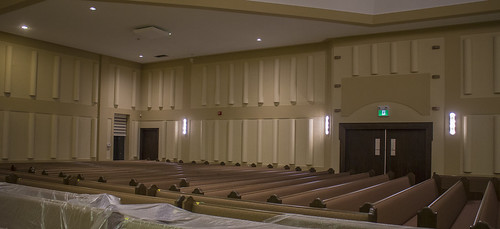
Churches don’t often get Reviews for their Acoustics and Sound System.  Kevin Young did such a review of one of my projects.  The installation company was CS Acoustics from New Hamburg, Ontario.  Here is the full Professional Sound Magazine Article about the Romanian Pentecostal Church in Kitchener, Ontario Canada.  Please leave any comments or questions below.

Should you have a chance, when your in the area, visit this church.  The people there will give you a tour. Better yet, go to a worship service.  it is different, but worth the experience.  Kevin Young is a Toronto based musician and freelance writer.

Joseph De Buglio

Posted in Church Acoustics, Church Sound Systems | Tagged: , , , , , , , , , , , , , , , , , , , , , , , , , , , | Comments Off on Romanian Church gets Excellent Acoustics and Reviewed by Professional Sound Magazine Article

Can Acoustical Spreadsheets Save Your Church Acoustics?

Posted by jdbsound on June 20, 2016


There are dozens of acoustical spreadsheets that come with the promise of a viable acoustical fix.  Some sheets are for studios and some are for home theatres.  There are also other spreadsheets for larger rooms.  As rooms get larger, (as in Christian Churches and worship centers) those spreadsheets become less accurate.  Sure, the better spreadsheets adds more variable to compensate for the limitations, but the limitations are still there. Furthermore, with all of the spreadsheets, you have to add an additional line to include a fudge factor.  In some spreadsheets you need to add multiple fudge factor lines.

When a person tries to use an acoustical spreadsheet, they are only looking at one parameter of the rooms acoustics.  You are only looking at “time.”  The problem is, for churches, and I MEAN ALL ROOMS WHERE MORE THAN 150 PEOPLE GATHER TO WORSHIP – there are other parameters that are equally or more important than “time.” Acoustical problems always come in layers.  The minimum number of layers of acoustical sound management in a worship space is 4 layers.  As a worship space becomes larger, the more layers you have to attend to.  “Time” becomes only a fraction of the real acoustical problems you are faced with.  Obviously you can’t see them but you can measure them if you are trained to recognize when you hear them.
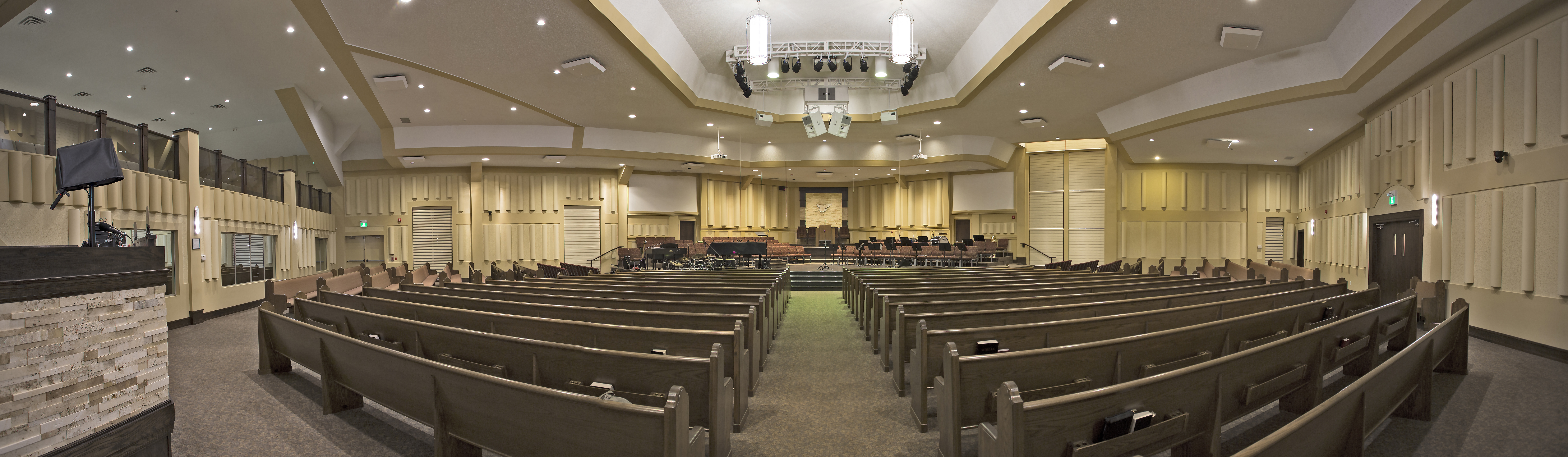
Romanian Church Kitchener Ontario Pano 1.jpgThe problem with spreadsheets is that they are not looking issues such as standing waves – and every church – regardless of shape has standing waves (unless the space is acoustically managed in the first place which also means this article is not for you.)  Spreadsheets are not looking at excessive noise from early and late reflections.  They are not looking at bass buildup often found in the corners of a room.  They are not looking at flutter echoes and full syllable echoes.  These are all sound effects than can’t be dialed out with equalizers, delays, algorithms and the next miracle digital gadget or software. (Yet that is how most sound system designers try to deal with room acoustics.)

Regardless of a persons acoustical training, knowledge or experience,  a spreadsheet cannot tell you when standing waves are masking flutter echoes.  A spreadsheet cannot tell you when bass build up is masking a standing wave issue.  A spreadsheet can’t tell you how much the early and later reflections are reducing music and speech intelligibility. 

All that a spreadsheet can tell you is how much “time” it takes for a sound to decay in a room either as an average number.  Some spreadsheets are much more detailed and they have been written as an attempt to calculate a room in octaves or by 1/3rd octaves.  If it was only that easy.  Measuring and calculating time is just a sliver of the acoustical signature of a space people worship in. 

church of our lady small.jpg

It takes a lot of training to learn Church acoustics.  The same applies to Studio Acoustics, Recital Halls, Concert halls and lecture halls.  All of these rooms have specific acoustical needs and they all require a unique set of skills to properly fix them.   

What makes a church so complicated is in how a church is used.  When a church is designed as a “church,” it becomes the most multipurpose space there is because of all the ways a worship space is used.  When you say you want the worship space to be more “Multi-Purpose” or more flexible in it use, you are actually limiting what a basic worship space is supposed to be able to do. 

At the end of the day, an acoustical spreadsheet is only a small snapshot into church acoustics.  It can’t help with congregational singing, it can’t help with a noisy stage for a praise and worship team or choir and it can’t help with drum issues or speech intelligibility. 

What often happens is with the spreadsheet, it will guide you to a solution that is based on absorption.  When an acoustical fix is based around absorption, you wind up “killing” the room for all music – especially contemporary music and congregational singing – and the masking effects of the other acoustical issues get worse.  Sure, the room sounds more tame than it was before, but the ability to understand speech is either no better than before or it has gotten worse.  Before you know it, everyone gets in ear monitors and all of the members of the worship team have to sign an insurance liability waver stating that they will not sue the church for any future health problems with hearing loss.  Seriously, is that the kind of acoustical fix you want? 
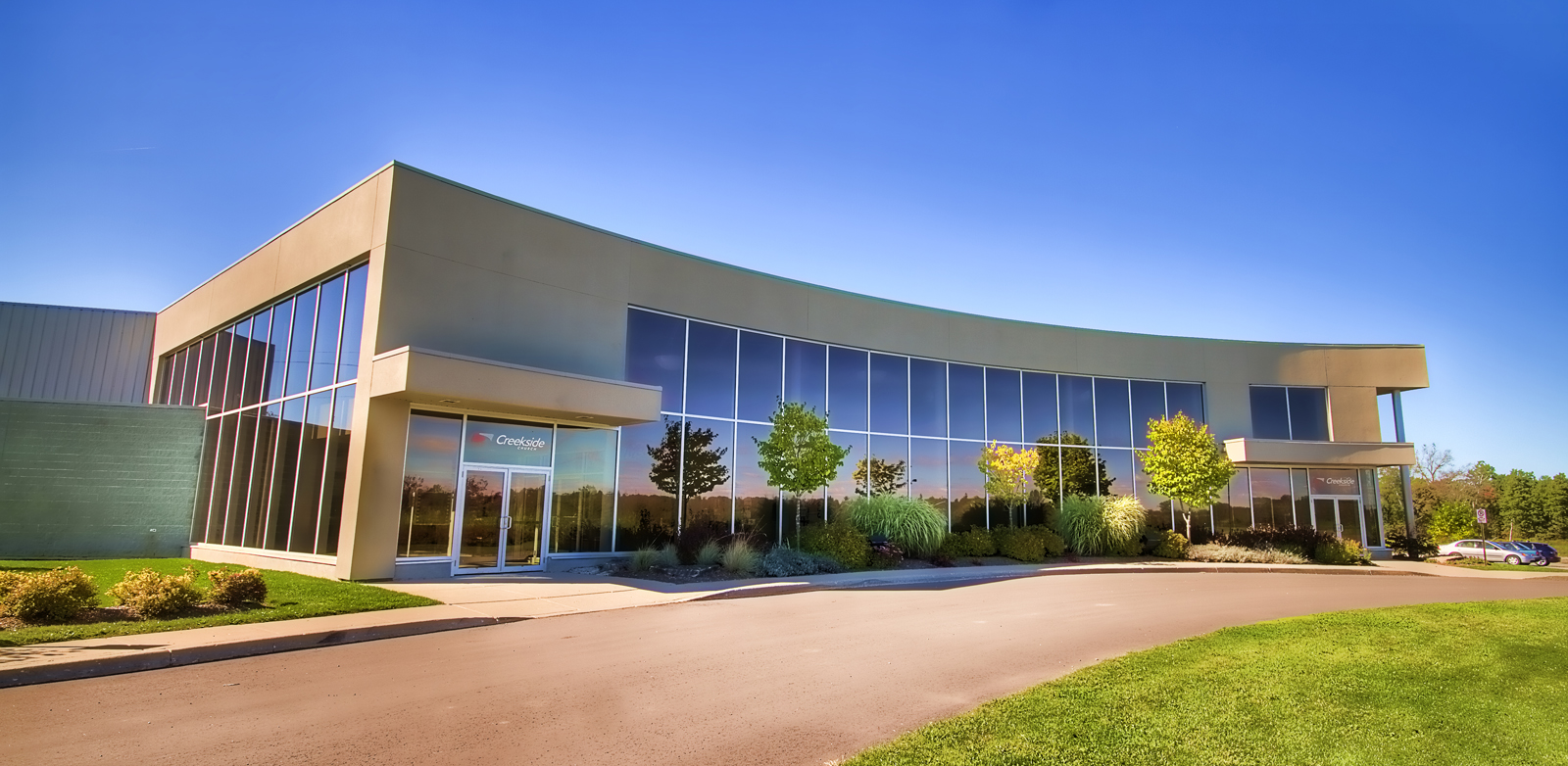
Front view of creekside church_edited-1.jpgThat is what you get when you turn to an acoustical solution based only on spreadsheet calculations.  To top it all off, the results are not much better when using computer simulation software programs.  Simulation programs only show you the results at one frequency at a time.  The computer generated image may be 3D but the patterns they show are only one frequency at a time – even when it is averaged out.  To see large room acoustics in a simulation, you need to be able to see the results in 4D.  Hologram can’t show you 4D images.  That ability hasn’t been invented yet.  You need to be able to see sound in 4 dimensions because all sounds are complex.  Every sound made on earth is a combination of wave lengths that are generated at the same time. Some parts of a sound are measured in feet and some in inches.  There is no way to visually see 100 Hertz, which is 11 ft long, and 4000 Hertz which is 3.5 inches long, at the same time in the same place yet in real life, that is what is happening with sound.  We all take sound for granted but the complexity of sound is extensive.

But doesn’t sound follow the rules of fluid dynamic and other laws of physics?  Of course it does, but only when you examine one frequency at a time and that frequency is never a pure tone.  It is always complex.  The only place you can measure and see a pure tone is in a machine like an oscilloscope and the moment you launch that sound into the air, it becomes complex.  Just as sound is complex, so are the acoustical fixes for churches. 
jdbsound test room.jpg

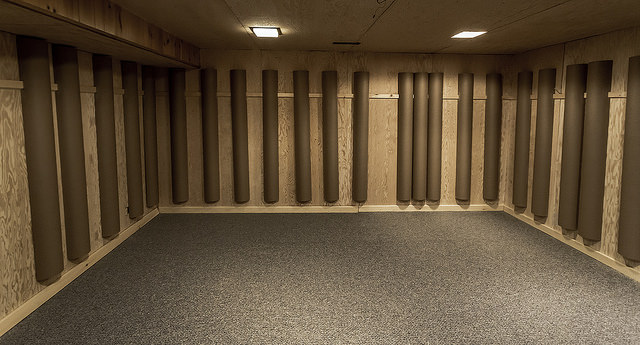
This is one way to test an acoustical solution before you recommend it to a church.  Have your own testing facility.  Whatever research is done in this room, it mathematical translates perfectly when it is scaled up into a larger space.

As a mantra, remember this:  for all Christian churches, acoustical problems come in layers and whatever fix you choose, it has to address all of the layers in one step – which is possible if you want an affordable fix.  There are many tools in the Acousticians Tool Box to fix a worship space. There are diffusers, resonators, traps and other devices that can address the needs of a church’s acoustics. There are also stand-alone electronic solutions that work in certain worship spaces. You need a lot of training to know which ones you need, what combinations you need and how to use them, and the last place you want to do your training and experimenting is on your customers. 

If you are doing Church Acoustics or trying to fix your own church, don’t do it as an experiment and you know it will be an experiment the moment someone in your committee say something like, “lets try this as see what happens.”  With those words, the acoustical solution is already doomed.  Experts like myself can tell you the results the second you decide to try something and long before you apply the materials. 

History shows that after a church spends it’s money on a thing such as acoustics, it will not be able to afford to fix any mistakes for decades.  If the results makes the room worse or no better than before, then you are subjecting the church members to more sound abuse for years to come and we don’t want that.  Spreadsheets don’t fix churches, good training and expert help does. (It’s also cheaper in the end to get expert help.)

Finally,  consider this.  The internet has become a treasure trove of knowledge.  That knowledge is often presented as expert information offering sure fire solutions.  I scan the internet often to see what is out there.  There is a lot of great information and there are a lot of myths.  When you collect all of that info, it only holds a fraction of the total knowledge about church acoustics.  If we were to put a percentage on it, the internet holds about 2% of the total knowledge there is for church acoustics.  The books hold another 8% of what there is to know about church acoustics.  Church acoustics is so complicated that often, a seasoned acoustical expert like myself will have to fix one of a kind acoustical fixes often.  Those unique fixes are often not shared because others may think that the one of a kind fix would be needed in every other church that has the same problem.  You can have 10 churches with the same acoustical problem but in every one the fix has to be modified because of the other variables that have to be included.  The rest of the knowledge about church acoustics is held by experts because the church community hasn’t taken ownership of that knowledge yet and there is no system in place for churches to share their experiences in order to avoid mistakes in the future.  What is missing is the wisdom in knowing what acoustical fixes will enhance worship verse what acoustical fixes exchanges one set of problems for another set of problems. Problems which holds back and undermines the real worship experience the church leaders want you to participate in. 

All church can have great acoustics and sound.  If each church denomination or independent church were to set-up their own “Church Sound Standards” for the performance of their sound systems and worships space acoustics, churches will become the kind of places where people want to go.  Once a standard is set, every church will have a Worship everyone can enjoy and appreciate. 

Joseph De Buglio

Acoustician and Expert in Church Acoustics.

Posted in Church Acoustics, Church Sound Systems, Educational Must Read Articles | Tagged: , , , , , , , , , , , , , , , , , , , , , , , , , | Comments Off on Can Acoustical Spreadsheets Save Your Church Acoustics?

Acoustics are Imuned to Worship Styles and Technology

Posted by jdbsound on May 29, 2016


For churches that have a contemporary worship program or provide worship-tainment, they have the exact same technical limitations with their sound systems as traditional worship services struggle with.  Both styles of worship are restricted equally because of room acoustics.  The worship team can’t hear themselves for the same reasons the choir can’t hear themselves.  The drummer always plays too loud for the same reason the organist plays too loud.  The congregational singing is no better in the traditional worship service as in the contemporary worship service except that in the contemporary worship service the sound system is better able to drown out congregational singing. Ouch!!

In the contemporary worship service where the room doesn’t support good acoustics, the congregational singing seems like it is not included or factored into creating a meaningful worship sound or experience. The church service looks and feels like it is ploughing through worship like a precision soldierly march.  Whether you are participating or not, the service marches on.

In a church with good acoustics the experience is much different.  You understand the words and the meanings of the songs sung.  That sense of worship and fellowship is experienced much the same way regardless of the worship style and denomination/non-denominational church you are part of. 

When the acoustical are bad, yes, some people will get something out of it.  After all, it is a house of God, but for the majority of people they often stand in frustrated silence knowing that whether they sing or not, their efforts will not add to the overall sound in the slightest.  Worship is about sharing, giving and receiving. 

When the acoustics are good, we share our voices, giving it to the room like a ray of sunshine and then we hope and get some of it back along with bits and pieces of everyone else’s sound.  We hear all of the parts of the music, the harmonies, all of the instruments, all of the words. We get moved by their meanings and we cast our walls away to be part of something bigger than ourselves.

When the acoustics are bad, we stand alone.  We hear the amplified sound filling the room but we can’t hear anything else.  The walls around us seem taller and we feel smaller.  Worship is supposed to be an inclusive experience.  The quality of the acoustics of a worship space matter no matter what style of worship you are involved in.

Posted in Church Acoustics | Comments Off on Acoustics are Imuned to Worship Styles and Technology

Completed Two New Projects

Posted by jdbsound on May 18, 2016


Two more church in 2016 have upgraded the acoustics to their worship spaces.

The first one is the Romanian Pentecostal Church of God.

Romanian Church poster 1

The second one is the K-W Christian Fellowship Church.

KW Christian Fellowship Church-1 s

Both churches are in Kitchener.  The supplier of the half round tubes for both projects was CS Acoustics from New Hamburg, Ontario Canada.  As for John Jukes.  He supplies a tube without any spirals plus he can cut them, supply mounting hardware and endcaps to meet fire code requirements.


Posted in Church Acoustics | Comments Off on Completed Two New Projects

How to Know if your Church has Good Acoustics – Part 1

Posted by jdbsound on February 3, 2016


Here is the first test you can do to know if you have good acoustics.  Have two people over 40 years of age standing 40 feet apart in the sanctuary.  Have one person on stage and the other anywhere in the audience.  With the room empty, the sound system off, with the lights on and whatever mechanical system that are on during worship, have the two people start a conversation.  The person in the audience area has to be understood by the person on stage equally as well as the person on stage to be understood by the person in the seating area.  This is important as all churches are used to hear and communicate from both ends of the worship space.

If the two people can converse for 5 minutes understanding each other, chances are your church is in good shape.  If hearing and understanding at 40 feet is not good, then move in closer until you do.  When speech becomes clear, that is the free field distance of the room.

If you can converse at 40 feet well, try moving further apart.  Keep moving apart until it become hard to understand or your up against the walls of the church.  If your able to increase the distance for understanding speech, then as you get further apart, the better the room most likely is.  This is step one.

Posted in Church Acoustics, Church Sound Systems, Educational Must Read Articles | Tagged: , , , , , , , , | Comments Off on How to Know if your Church has Good Acoustics – Part 1

Church Ceilings

Posted by jdbsound on January 8, 2016


Tip of the day.

If your planning a new church or plan on buying or leasing a commercial building, there is no instance where a floor and ceiling that are parallel that sounds good.  Sure, there are a lot of churches and worship spaces that have parallel floors and ceiling but when compared to cathedral, vaulted or angled ceilings, there is a huge difference.

When the ceiling and floor are parallel, it is harder to manage the stage sound, congregational singing suffers and room coverage suffers too.  It is harder to get good bass sounds as the frequency is limited by the height of the room.  So if you have a 20 ft ceiling, sounds below 50 Hertz will distort as you increase the volume to “feel the sound.”

To change the room, changing the ceiling is cheaper and better than changing the floor as the angle of the floor is limited to how long people have to stand on a sloped floor.  The more time you spend worshiping on your feet, the less a sloped floor makes sense.

When you change the ceiling, you can also make the acoustical treatment tunable at no extra cost.  Tuning means you are equalizing the room passively.  This form of control remains more stable when humidity and temperature changes.  Congregational singing increases humidity within the first five minutes and temperature within the first eight minutes of worship.  If you find your mixes are falling apart after the second or third song of singing, it is because the room changed, not because of your mixing skills.

Tip of the Day

Joseph De Buglio

Posted in Church Acoustics | Comments Off on Church Ceilings

Introduction Updated – About

Posted by jdbsound on December 3, 2015


Nothing is more frustrating than visiting a church and not understanding or struggling to hear what is being said.  With all the science and knowledge there is, there is no excuse for any church, new or old to not have good sound.  Sadly, only five percent of the total church community has sound quality that is suited for worship.  Sure, there are some churches that have one aspect of church sound that passes but very few churches can do speech, music and congregational singing well.

Church Acoustics is one of the most difficult professions to work in. While it is complicated and the variable are infinite, it is made much easier with consistently good results when following the biblical method of controlling any room.  There are only a few people in the world that follow this method but once you experience the quality of the acoustics of one of these churches that are managed in this way, everything else sounds disappointing.

The Church Sound System is one of the easiest systems to design, install and use when you have good acoustics.  When you have poor acoustics, the sound system always fights back and lets you know where the problems are.  Until the room is tamed, no amount of sound equipment or expert knowledge can overcome the physical barriers of the room.  In an age when headsets, ear buds, HDTV, computers and home entertainment systems are of such high quality, first time visitor and members of most churches want the same quality sound at church.  When the acoustics of a church follows the Bible’s example of quality sound (which is a method detailed over 3000 years ago), it allows the modern sound system to perform as good as any contemporary form of media there is and satisfy the most discriminate of listeners while delivering the best level of speech possible.

Posted in Church Acoustics | Comments Off on Introduction Updated – About

Church Acoustics is like Musical Instruments

Posted by jdbsound on June 11, 2015


Church Acoustics is like Musical Instruments.  Every room shape has a unique sound.

  • Violins are Rectangle rooms,
  • Trumpets are square rooms,
  • Clarinets are fan shaped room with 5 sides,
  • Tubas are oval and round rooms,
  • Trombones are octagon shaped rooms,
  • Oboes are like hexagon shaped rooms,
  • Alto Sax is like a pentagon shaped rooms,
  • French horns are 7 sided rooms.

All of these room shapes can sound amazing when they are not broken or absent of the right acoustical management systems.  Everyone wants their church to sound like a violin but the one thing no one can do is make a Clarinet or Trumpet sound like a Violin.  What you can do is create the best sounding and best performing musical instrument. Trumpets, trombones, saxophones and a piano are all great instruments when they are not broken or incomplete.

Posted in Church Acoustics | Comments Off on Church Acoustics is like Musical Instruments

What is the difference between scattering sound and diffusion of sound? Are Diffusers Programmable?

Posted by jdbsound on April 26, 2015


The simple answer is as follows.  Half, quart or third round devices or objects individually just scatter sound.  A single barrel diffuser or tube radiator as I often call them just create a very uneven distribution of sound.  As single units, it gives about the same amount of performance as placing a flat object of the same size and placing at a 15 to 35 degree angle on a wall.

When using barrel diffusers in various sizes and/or in spacing varying from 0 to 30 inches and apply them to all of the walls in a confined space, you are creating a diffusive field.  You’re turning the church walls into a phase coherent sound field – like churches of yester year built between the 1400’s to 1700’s.  When barrel tubes are used as a system you can program them to only manage the acoustical problems you want to get rid of and at the same time create a more desirable sound field like real reverberation that is musical and supportive to congregational singing.

Barrel tubes spaced too far apart just scatter the sound and reduces some bass but does nothing much else.  Instead, you can program the diffusers to manage standing waves, bass buildup, notch a frequency or two and equalize a room.  You can also program them to lower stage noise, manage monitor spill into the audience and improve congregational singing.  They can also be programs to make the sound system perform better.

The software to program barrel diffusers is still in development.  In the meantime, a test room, and a data base of real world testing is the best way to predict the final outcomes.  Try and program a digital EQ to cut 350 hertz 40dB.  It can be done but it sounds awful.  When you program tube radiators to cut 40dB, it sounds sweet.

Joseph De Buglio

Posted in Church Acoustics | Tagged: , , , , , , , , , , , , , , , , , , , , , , , , , | Comments Off on What is the difference between scattering sound and diffusion of sound? Are Diffusers Programmable?